...

HOA Budget Best Practices: Planning, Accuracy, and Financial Stability

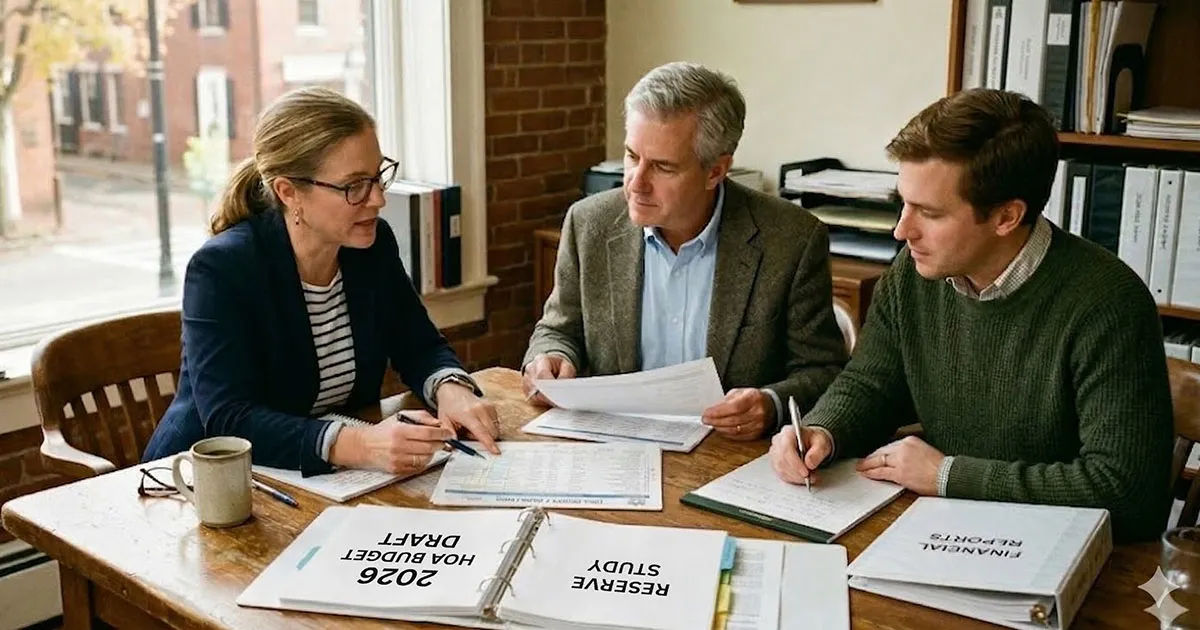
Community association board members reviewing HOA budget documents at a meeting table
Budget shortfalls don't announce themselves at convenient times. HOA budget best practices, grounded in real data, reserve studies, and honest financial planning, help boards avoid special assessments and build long-term stability.

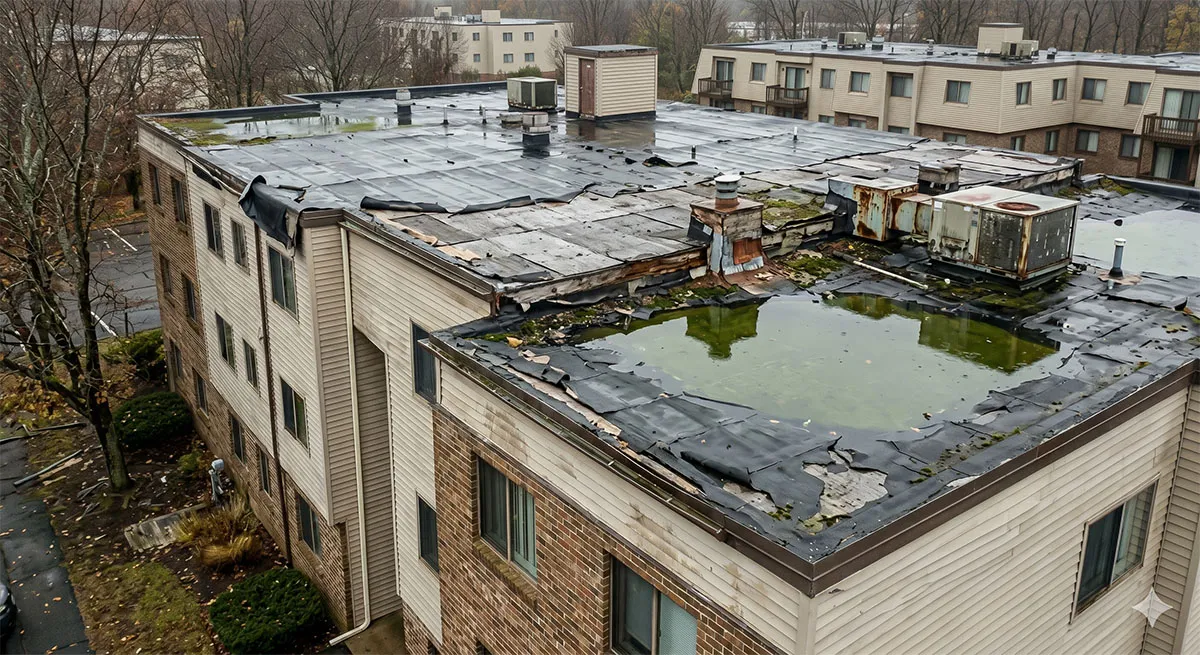
A budget shortfall doesn’t announce itself at a convenient time. It surfaces as a surprise special assessment, a deferred roof repair that becomes an emergency, or a reserve fund that can’t cover what the community actually needs. For volunteer board members balancing day jobs with governance responsibilities, the annual budget can feel like guesswork. And guesswork is how communities drift off course financially.

The good news: HOA budget best practices aren’t complicated. They require discipline, accurate data, and a willingness to plan honestly rather than optimistically. This guide walks through the budgeting process from start to finish, covering how to structure your operating budget, connect it to reserve studies, avoid the most common mistakes, and build the kind of long term financial stability that protects property values and keeps special assessments off the table.

Why HOA Budget Best Practices Matter for Financial Stability

A well-built budget is the single most important governance tool a board has. It translates the community’s physical needs into a financial plan, sets common charge levels that are sustainable rather than artificially low, and gives board members a framework for making decisions grounded in data instead of assumption.

When budgeting best practices are ignored, the consequences compound. Common charges kept flat for years create a widening gap between what the community collects and what its infrastructure demands. Think of it like an ocean liner with twelve engines. Budget cuts take engines offline one by one, and when the storm hits, you don’t have the power to correct course. Over a decade, the drift becomes a crisis you can’t fix in a single budget year.

Financial stability doesn’t happen by accident. It’s the result of boards committing to realistic budgets that reflect actual asset conditions, building reserves intentionally, and treating the annual budget as a governance event, not an administrative checkbox.

Key Components of an HOA Budgeting Process

Every association budget has two major parts: the operating budget and the reserve fund contribution. Understanding how they work together is the foundation of sound financial planning.

Operating Budget Line Items

The operating budget covers the community’s recurring annual expenses, everything from landscaping contracts and insurance premiums to utilities, management fees, and routine maintenance. Each line item should be built from actual contract amounts, historical data, and known cost changes, not rounded estimates carried forward from the prior year.

Common operating budget line items include landscaping and snow removal, insurance (typically the largest single expense), utilities for common areas, professional management fees, legal and accounting services, administrative costs, and routine repair and replacement of common elements. Every line item should tie back to a contract, a vendor quote, or a documented expense history.

Reserve Fund Contributions

Reserve contributions fund major capital expenses: roofing, paving, structural repairs, amenity renovations, elevator maintenance, and other large-ticket items that don’t recur annually but are inevitable. Connecticut law requires associations to provide for adequate reserves and to disclose how those reserves are calculated and funded, but it does not mandate a professional reserve study. That said, a professionally prepared reserve study is the most reliable way to determine what your community should be contributing each year, and it’s the standard recommended by Community Associations Institute (CAI) for all associations.

A reserve study that sits on a desk collecting dust is a wasted investment. The budgeting process should reference the reserve study directly, confirming that annual contributions align with projected capital needs. When reserve studies become living tools, updated with actual contributions, interest earned, and expenses incurred, boards can make decisions based on real numbers rather than outdated projections.

Connecting the Budget to Governing Documents and Connecticut Law

Your association’s governing documents and applicable state laws dictate how budgets must be prepared, approved, and communicated to owners. In Connecticut, the budget adoption process is governed by the Common Interest Ownership Act (CIOA), specifically Section 47-261e. This matters because CIOA’s procedures supersede whatever your declaration or bylaws may say about budget approval.

Here’s what Connecticut law requires. The executive board must adopt a proposed budget at least annually. Within 30 days of adopting the proposed budget, the board must provide all unit owners a summary that includes a statement of any reserves and the basis on which those reserves are calculated and funded. At the same time, the board must set a date, between 10 and 60 days out, for either a meeting or a vote by ballot to consider approval or rejection of the proposed budget.

The approval mechanism is important to understand. Under CIOA, a budget adopted by the executive board is deemed approved unless a majority of all unit owners votes to reject it. That’s a majority of all owners, not just those who show up to vote. If a proposed budget is rejected, the last approved budget continues until unit owners approve a subsequent one.

One complication boards should be aware of: three different sets of Connecticut laws govern condominiums depending on when they were created. The Unit Ownership Act covers condominiums created before 1977, the Condominium Act covers those created from 1977 through 1983, and CIOA covers communities formed after December 31, 1983. Since most condominiums in the Greater New Haven, Shoreline, and Fairfield County markets were built in the mid-1980s to early 1990s, the majority fall under CIOA. But if your community predates 1984, you should work with your management company and legal counsel to confirm which budgeting procedures apply to your specific association.

Regardless of which statute governs your community, the principle is the same: the budget is a legal governance document, not just a financial worksheet. Boards should confirm that their process satisfies all statutory requirements every year and not assume last year’s approach still applies.

Common HOA Budget Mistakes and How to Avoid Them

Most budget problems aren’t caused by a single bad decision. They result from patterns, small compromises repeated year after year until the community is in a financial hole.

Keeping common charges artificially low. This is the most damaging budget mistake a board can make. Holding fees flat feels like a win for homeowners in the short term, but it guarantees underfunded reserves and deferred maintenance. Two groups of homeowners move into a brand-new community on the same day. One group starts reserving immediately. The other says, “It’s brand new, that’s someone else’s problem.” Twenty-three years later, the second group faces a special assessment or a bank loan. The first group never needed either.

Ignoring historical data. Budgets built on assumptions instead of actual expense history are unreliable. Review at least three years of line item actuals before setting next year’s numbers. Flag any line items with significant variance and investigate why.

Treating insurance as a commodity. Insurance is typically the largest single line item in an association’s operating budget, yet many boards treat the renewal like commodity shopping. A strategic approach, one that evaluates risk profiles, loss runs, construction type, and mitigation measures, can produce real savings. One community, on professional advice, amended their declaration to require water mitigation systems in every unit. Their insurance premiums went down.

Skipping the reserve study connection. An annual budget that doesn’t reference the reserve study is incomplete. Capital needs don’t disappear because they aren’t in the operating budget. They just show up later as emergencies or special assessments.

Budgeting for bad debt at zero. Every community has some level of delinquency. A realistic budget accounts for bad debt based on the community’s actual collection history, not an optimistic assumption that every owner will pay on time.

Building an Annual Budget That Supports Long-Term Planning

The strongest budgets aren’t built in isolation. They’re connected to a multi-year financial plan that accounts for both operating needs and capital requirements.

Start with the reserve study. Determine the annual reserve contribution needed to stay on track with projected capital expenses. This number should be treated as a floor, not a target to negotiate down.

Build operating line items from real data. Pull actual expenses from the prior two to three years. Compare against current contracts. Factor in known increases like insurance renewals, utility rate changes, and new vendor agreements. Use standardized scope-of-work documents when soliciting vendor bids so you’re comparing proposals on equal terms.

Include a contingency line. Even the most thorough budget can’t anticipate everything. A modest contingency, typically 3–5% of operating expenses, provides a buffer without inflating common charges unnecessarily.

Present the budget with context. Board members and homeowners make better decisions when they understand the reasoning behind the numbers. A budget presented alongside reserve study data, contract summaries, and variance explanations from the prior year builds building trust and reduces pushback on necessary fee adjustments.

Review the budget against the association’s financial plan quarterly. A budget approved in September shouldn’t be the last time the board looks at it. Quarterly reviews against actuals catch variances early and allow for course corrections before they become year-end shortfalls. Your HOA manager and in-house accounting team should be delivering monthly financial packages reconciled with bank statements, and any abnormal line items should be flagged and explained proactively.

Frequently Asked Questions

What does a typical HOA budget look like?

A typical HOA budget includes two major sections: operating expenses and reserve fund contributions. Operating expenses cover recurring costs such as insurance, landscaping, utilities, management fees, legal and accounting services, routine maintenance, and administrative expenses. Reserve contributions fund future capital projects like roofing, paving, and major system replacements. Each line item should be based on actual contracts, historical spending data, and the community’s current reserve study, not estimates carried forward without review.

How often should an HOA budget be reviewed?

The annual budget should be prepared and approved once per year, but boards should review financial performance against the budget quarterly at minimum. Monthly financial packages, reconciled with bank statements and delivered with variance explanations, allow boards to catch problems early. Reserve studies should also be reviewed annually to confirm that contribution levels still align with projected capital needs and actual fund balances.

What expenses should be included in an HOA budget?

Every recurring and predictable expense the association will incur belongs in the operating budget. This includes insurance premiums, landscaping and snow removal contracts, utilities for common areas, management company fees, legal counsel and accounting services, administrative costs, routine maintenance and repairs, and a reasonable allowance for bad debt. Reserve contributions for major capital expenses like roof replacement, paving, elevator maintenance, and amenity renovations should be budgeted separately based on the community’s reserve study projections.

How can HOAs avoid budget shortfalls?

Budget shortfalls typically result from artificially low common charges, ignored reserve studies, and budgets built on optimistic assumptions rather than historical data. To avoid them, boards should tie every line item to actual contracts or documented expense history, fund reserves according to the reserve study, include a contingency line for unexpected costs, account for realistic bad debt levels, and review actuals against the budget quarterly. Most importantly, boards must resist the pressure to hold fees flat when the community’s actual costs are rising. Deferring necessary increases only makes the eventual correction larger and more painful.

Your board deserves a partner, not an order-taker.

HOA budget best practices start with honest financial planning and a management partner willing to challenge your board to get to the best answer. If your community is ready for structured governance and proactive financial planning, let’s talk about your community.

Share the Post:

Related Posts

Subscribe to Updates